
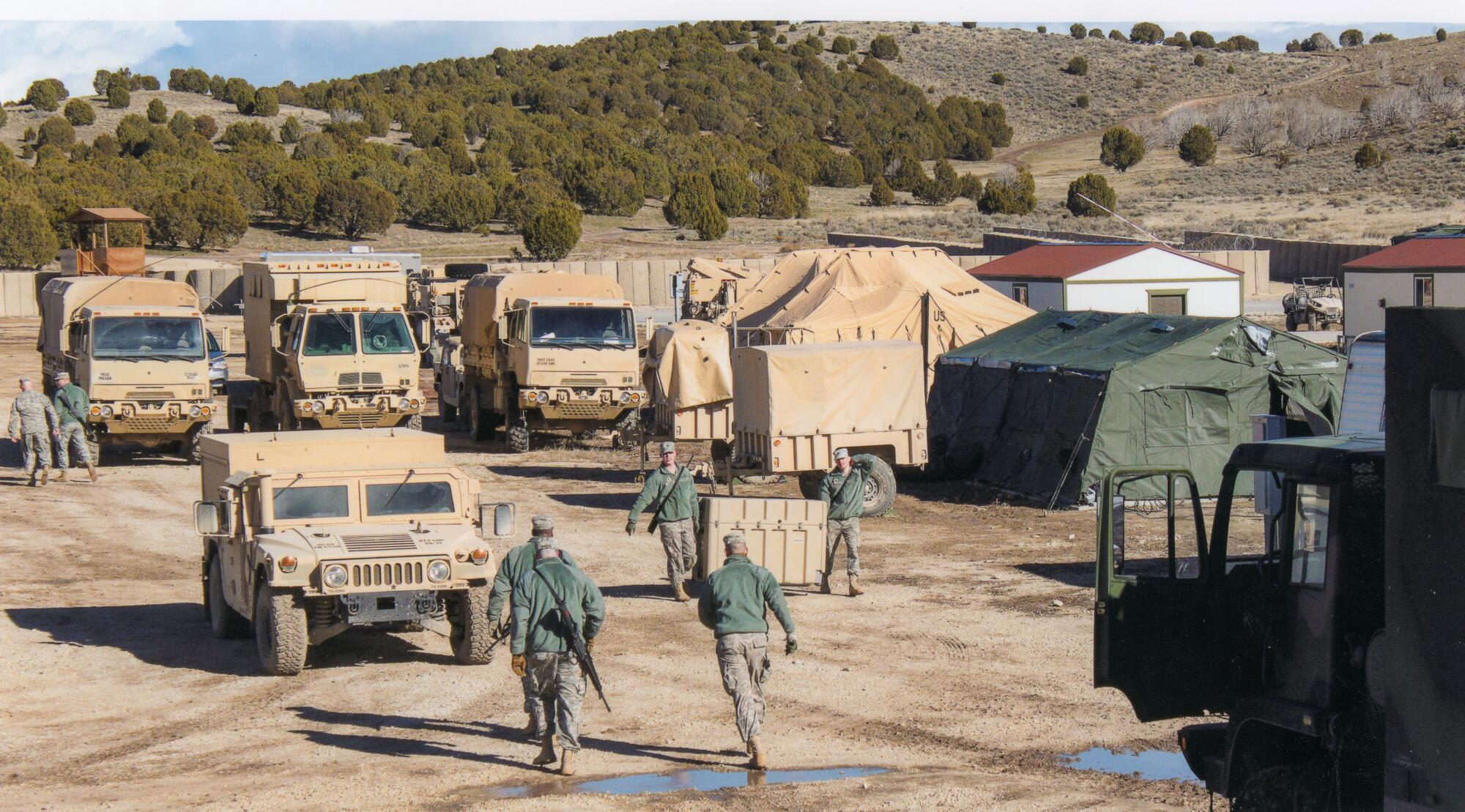
To secure a Defense Base Act settlement for an overseas accident, you need to show your work was tied to a U.S. government-funded contract. You must also prove your employer controlled your work, even if a foreign subcontractor issued your paycheck. If your injury happened off-base or off-duty, you need to connect it to the risks created by your overseas assignment itself.
A report by FVAP, shared by American Citizens Abroad, estimates that between five and six million U.S. citizens live and work overseas, including military personnel and civilian contractors. If you’re one of the workers under a U.S. government contract and hurt while carrying out that work, you’ll need to prove jurisdiction before your claim is considered valid. Understanding exactly what you need to establish, and the evidence that proves it, puts you back in control of your claim.
What Connects Your Overseas Job to Defense Base Act Coverage?
The DBA extends the protections of the Longshore and Harbor Workers’ Compensation Act to particular workers. These include employees on U.S. military bases and those performing qualifying public work under U.S. government contracts or subcontracts.
Working for a government contractor isn’t enough; your position must directly relate to qualifying work. To establish this connection, identify:
- Government agency or entity
- Prime contractor
- Applicable subcontract
- Project or service
- Assigned duties
The statute defines public work broadly, covering construction, repair, and projects tied to national defense. Contract terms become critical when your employer is several levels removed from the government, as insurers often scrutinize this distance for inconsistencies.
Can You Prove Jurisdiction If a Foreign Subcontractor Employed You?
A foreign subcontractor paying your wages doesn’t block DBA coverage. What matters is where your employer sits within the contracting structure.
Trace the relationship from your immediate employer through the prime contractor to the government contract. Build evidence regarding:
- Immediate employer
- Prime contractor
- Government agency
- Contract or project
- Assigned position and duties
This differs from subcontractor injury liability, which focuses on who caused the injury, not whether the DBA applies. Keeping the two questions separate keeps you from wasting evidence on the wrong argument.
Does an Off-Base or Off-Duty Injury Still Connect to Your Employment?
The zone of special danger doctrine extends coverage when overseas work conditions present an injury risk. The question isn’t whether you were off duty, but what created the risk. Examine these factors:
- Overseas location
- Living conditions
- Assignment requirements
- Travel circumstances
In O’Leary v. Brown-Pacific-Maxon, the Supreme Court ruled that coverage may extend to injuries arising from dangers created by employment conditions. This doctrine continues to shape claims involving overseas military base accidents, although purely personal incidents unrelated to those conditions may fall outside coverage.
Evidence Needed to Prove Defense Base Act Settlement
Organize your evidence into four categories, each addressing a specific fact an adjuster may question. To prove your employment, make sure to gather:
- Employment agreement
- Payroll records
- Job description
You can prove the government contract by collecting:
- Contract number
- Subcontract documents
- Statement of work
Evidence that can prove your overseas assignment includes:
- Deployment orders
- Travel records
- Base-access records
Proof for the accident itself may include an incident report, witness statements, and medical records. Organizing your records this way, rather than filing them together, makes it easier to spot what’s missing before the insurer does.
When the Insurer Disputes Jurisdiction
Insurers rarely dispute your entire overseas employment. They isolate one specific fact and build their denial around that single point, whether it’s your:
- Contract
- Employment relationship
- Location at the time of injury
Once you know which fact is being challenged, respond directly to it rather than resubmitting your entire file. It also helps to compare your own records against how the insurer describes your position in their denial letter.
Any inconsistency between the two often points to the real issue driving the dispute. Pressing on that specific gap moves your claim forward faster than arguing your overseas employment generally.
When to Consult a Defense Base Act Attorney
A Defense Base Act attorney becomes valuable when coverage depends on complicated facts rather than a straightforward on-base accident. Consider legal guidance when:
- Employer denies DBA coverage
- Foreign subcontractor involved
- Government contract unclear
- Accident occurred off base or off duty
Cases involving multiple companies often create the toughest jurisdiction disputes. One company may issue your paycheck while another controls your work. At Barnes Law Firm, we can examine that structure alongside your records to identify the right jurisdictional theory before you negotiate.
Frequently Asked Questions
Does a Pre-Existing Condition Defeat Jurisdiction?
No, a pre-existing condition doesn’t defeat jurisdiction. It can affect how much compensation you’re entitled to, but it does not influence whether the Longshore Act applies to your case in the first instance. Jurisdiction and compensability are treated as separate questions.
Are Foreign National Employees Covered Under the Defense Base Act?
Yes, if they’re employed under a covered contract. Coverage doesn’t depend on citizenship or nationality.
It depends on whether the contract funding and the employer’s control over the work meet the statutory requirements. A foreign national who performs equivalent duties under the contract may be entitled to the same protections as U.S. citizens.
How Much Compensation Can You Expect From a Defense Base Act Claim?
There is no fixed amount for a Defense Base Act settlement, as compensation depends on factors such as:
- Average weekly wage
- Medical evidence
- Degree of disability
- Ability to return to work
- Long-term work restrictions
Claims involving permanent impairment may have greater value than temporary disability claims. Your specific injury and supporting evidence ultimately determine the compensation you may receive.
Understand How to Prove Jurisdiction Under the Longshore Act Today
Proving DBA jurisdiction gives your claim the foundation it needs before pursuing compensation. Complicated contracts, subcontractors, or remote accidents make the right legal connection essential. Work with an experienced attorney to pursue a Defense Base Act settlement built on solid evidence.
At Barnes Law Firm, we’ve spent over 20 years fighting for civilian contractors and military personnel injured overseas. Led by Houston attorney Thomas Barnes, our team handles Defense Base Act, maritime, and workplace injury claims across the U.S. and worldwide, with no direct client fees.
Contact us today to establish jurisdiction and build a strong Defense Base Act settlement claim.